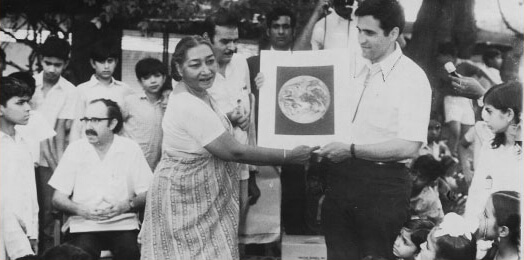

Shanta Gandhi was a multifaceted personality – a trained scientist, dancer, theatre person, writer, and educationist. Born in 1932, she spent her early years in an ashram in Wardha, before her family moved to Mumbai, where she went to school.
She joined a medical college in London, which she had to abandon halfway. But while she was there, she interacted with other young Indians like Indira Gandhi and Feroze Gandhi, and was drawn towards the student wing of the Indian freedom movement. It was there that she forged her lifelong association with the student wing of the Communist Party of India. It was also around this time that she spent some months at Uday Shankar’s dance school in Almora, where her fellow students included Guru Dutt and Zohra Sehgal.
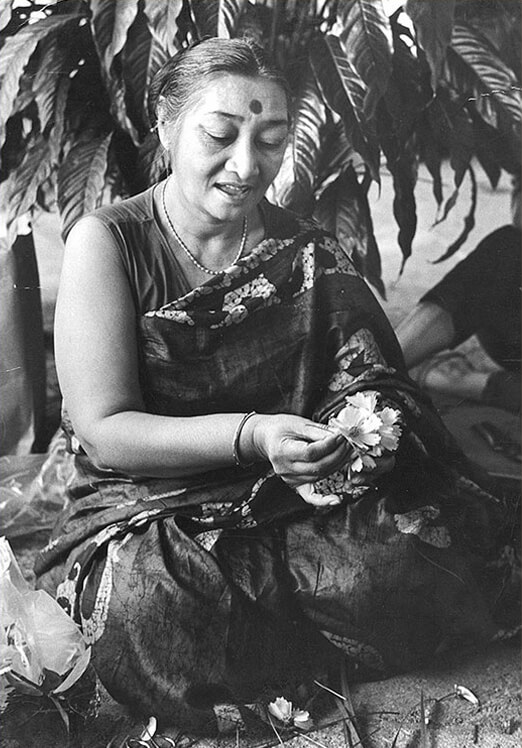
A founder member of IPTA (Indian People’s Theatre Association), she was closely associated with people like Balraj Sahni, Ravi Shankar, K.A. Abbas, and Safdar Hashmi. She travelled extensively with the IPTA dance troupe across the country and continued to do so even after independence. Her work often engaged with tribal/indigenous art forms, most notably in her 1980 production of Jasma Odan, a traditional Gujarati folklore, which gained international acclaim. It was this intense engagement with various cultural traditions and people across India that shaped her unique worldview.
Her work on the Sangati curriculum was rooted in her belief in the power of stories. These are not merely fairy tales or mythical narratives but are often constructed on a solid bedrock of scientific logic and reasoning.
The Avehi Abacus Project’s work is deeply inspired by her vision.
"Because they are young, they should not be denied knowledge… Do not talk down to children… What you tell them must be the truth… but it must be made accessible to them."
- Shanta Gandhi